Late April, 2026
Bresson and birthdays.
We were in London. We were in Zurich, then Halifax. I turned 30. I deleted Instagram, created a well-formatted email signature (pronouns included), built a rapport with my local cobbler, hired a new accountant, and became really inspired by the kettlebell and achieving the perfect balance between climbing the level 18 incline and running at level 5-6 speed back to back on the treadmill. I gained an appreciation of the tinned fish and the jar of pickled onions, the intimacy of letters and phone calls scheduled weeks in advance. But it did occur to me when the lights went on at the end of The Devil, Probably (1977) and I tore a hole in my jacket as I was leaving the theater, that I could throw all this away. Instead we went on a walk. Inventing reasons to live in a world where the case against life looms large is a thankless and godless task, like fighting for a hemming and hawing queen who doesn’t really love you in the same straightforward way you love her (Lancelot du Lac from 1974, and whether that actually happened, who’s to say).
Bresson gazes upon the structural disincentivization of love, truth, and kindness with a divine ambivalence so cruel it approaches care, though crucially it is not. In Charismatic evangelicalism (the sect that absorbed my youth), we were always anticipating the crash after a supernatural encounter with the spirit so pleasurable it lays bare life’s cracks and fissures, though that hardly meant we were prepared. To meet God, we were warned, will make living unbearable; in fact, the more painful the plummet the more likely you had met at all. (It is in essence a drug culture.) In The Devil, Probably, the world is a place where every blank-faced drifter is either in a perpetual comedown or chasing a high no one has ever seen or experienced despite the music in the park and the friends and the therapy, or the cushion of post-68 employment. That absence of pleasure provokes—can we imagine it? Has it really been imagined yet? That night I lost my appetite, but that in itself proved to me that I very organically and inexplicably wanted to live.
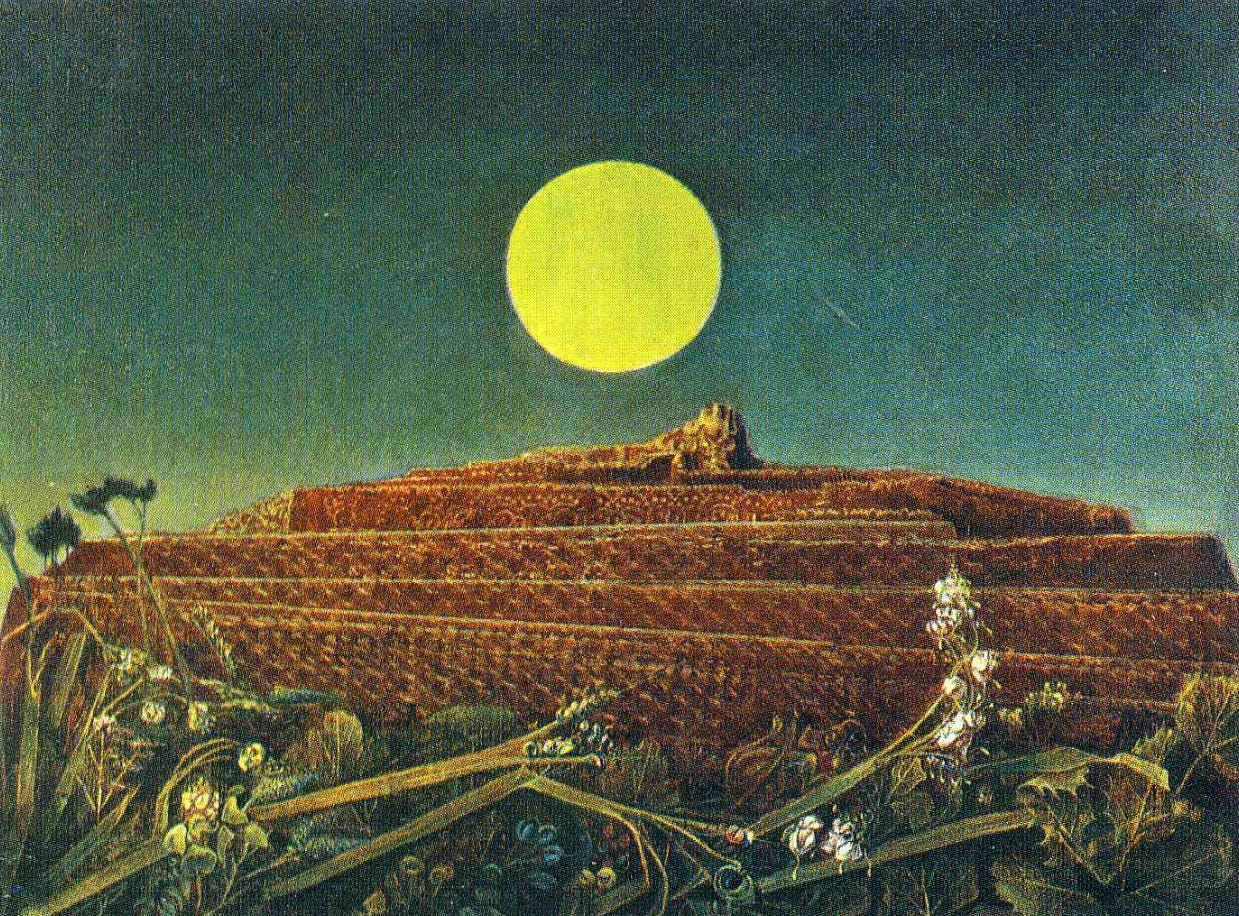
Max Ernst, The Entire City, 1934.
I saw this in person at the Kunsthaus in Zurich, where it was much more green.
…
Isiah and I will be in NYC for the weekend to present Gangsterism, which is the closing night film for Prismatic Ground. The screening is on Sunday, May 3. See you there.